
Quick answer
Is RuneScape: Dragonwilds worth it after 1.0?
The accounts behind this page agree on the shape of the game even where they disagree on the conclusion. Its magic, its gathering and its skill list are what every first-hand reviewer names as the thing no competitor does; its building loop is what they keep going back to; and its combat is the system each of them criticises — which is also where the studio concentrated the 1.0 update. Whether that is worth $29.99 depends on what you want out of the genre, and on one question the sources cannot answer at all: none of them describes the 1.0 ending.
- A thirty-hour write-up posted two days before launch calls the world “pretty, but hollow”, says swings land “in a different room than the enemy”, and closes by telling readers to wait a year. The same post calls rune magic tied to gathering “a genuinely clever idea that no other survival game is doing”.
- A launch-day review from a creator playing his first RuneScape game grades it Gold, one step below his channel’s top mark, and says the story runs 20 to 24 hours while a builder can sink in 100 to 200.
- Jagex replied in the same thread that 1.0 would bring “a ton of combat changes”, ruled out a grappling hook or a glider, and pointed at flying carpets, the rideable Terrorbird and teleport, blink and windstep spells instead.
- The storefront’s own panels showed 965 reviews in the previous thirty days at 79% positive beside 597 Simplified Chinese reviews at 46% when this page was checked — two populations, two verdicts, neither of them ours.
- Nothing on this page was played. That is a limitation, not a disclaimer: it is why the verdict is written as a comparison of evidence and why the platform question is flagged rather than answered.
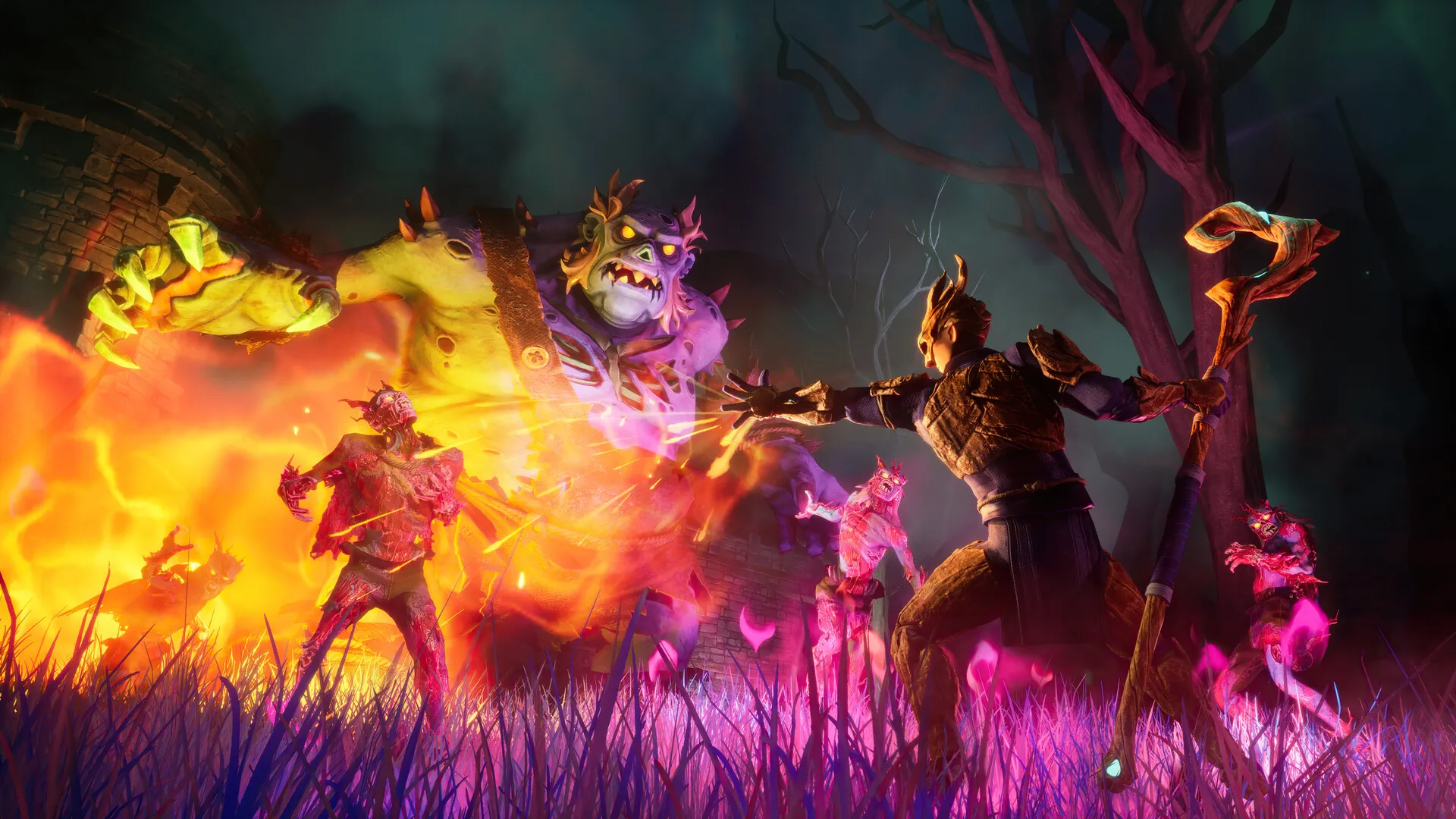
What an Original Review Has to Answer
Four different things call themselves a review of this game, and they do not carry the same weight.
Search the game’s name and the page fills up with opinion in at least four shapes: a creator with a couple of hours who explains what is coming, a player with thirty hours who is deciding whether to keep going, a discussion post written in the first week of early access, and a storefront that reduces tens of thousands of people to a single adjective. None of those is worthless. None of them is interchangeable either, and the whole difference sits in the labels rather than in the verdict.
A review a reader can actually use states five things before it states an opinion:
- Which build. A verdict handed to the April 2025 early access build describes a game that has since been reworked, expanded and finished. Version numbers and dates are not bureaucracy; they are the difference between evidence and nostalgia.
- Which platform. Dragonwilds shipped on four of them at once, with crossplay between them, and the experience of a handheld Switch 2 copy is not the experience of a desktop with a discrete card.
- How long, and how far. A reviewer who stopped at hour twelve and one who finished the raid are answering different questions, and only the hour count tells the reader which question they are reading.
- Under what rules. Solo or co-op, standard, creative or custom, hosted or dedicated. The world settings and dedicated server pages show how much those levers move the game.
- Who is talking. A fifteen-year RuneScape veteran and a survival-game newcomer bring different expectations to the same skill list, and the sources behind this page contain both.
Then the verdict has to walk the axes, because “is it good” is not one question. Combat, because it is the system you use most. Traversal, because it is the system you use between everything else. Building, because it is the reason a large part of this audience is here. The skill and progression loop, which is this series’ inheritance. How long the content lasts, which is the question launch-week buyers actually ask. How it runs. What it costs, and whether it is inside a subscription you already pay for.
A score is a summary, not a method
Every verdict quoted on this page is worth exactly as much as the labels attached to it. A grade given to a build that no longer exists and a percentage drawn from a storefront are both evidence about something specific, and this page treats them that way instead of collapsing them into one number.
How This Verdict Was Assembled
Seven sources sit behind this page. Two of them describe a build that no longer exists, and one of them is not a review at all.
Nothing on this page was played. There is no footage from this site, no character created and no hour count to disclose, so the verdict below is a comparison of accounts rather than an experience report. That limitation shapes every claim that follows: where an account is first-hand it is attributed and dated, where it is second-hand it is labelled as such, and where the sources simply contradict each other the contradiction is printed rather than smoothed over.
| Account | What it is | Where it sits in time |
|---|---|---|
| “30 hours into Dragonwilds — my honest review of the game”, r/RSDragonwilds | A long-form player verdict in six labelled parts — traversal, exploration, building, inventory, combat and the dragon events — followed by its own list of what the game gets right | Shown as three days old when retrieved on 16 September 2026, which places it around 13 September, two days before 1.0 shipped |
| Caffeinated Dad Gaming, “RuneScape Dragonwilds 1.0 — A Working Dads Review” | A launch-day video review from a creator who states up front that this is the first RuneScape game he has ever played | Published 15 September 2026, the day 1.0 went live, shortly after he reached the end of his first run |
| Jagex moderator replies in that Reddit thread | Three answers from a Jagex employee in a public comment thread, including the studio’s position on traversal and its response to the “hollow” criticism | Shown as two days old when retrieved, so around 14 September 2026, one day before launch |
| “My review on RS Dragonwilds”, Steam discussions | A fifty-hour player’s verdict from a self-described veteran of other survival games, covering difficulty, co-op scaling, animation cancelling and monster AI | Posted 22 April 2025, the week early access opened — seventeen months before 1.0 |
| Slimmbarian, “Everything You Need to Know About RuneScape Dragonwilds 1.0” | A pre-launch explainer that the creator opens by admitting he has “only a couple of hours” and had not played recently | Published 13 September 2026, two days before launch. Used here only for the population history it reports |
| The store review panels for app 1374490 | The platform’s own aggregate of everyone who left a review, broken down by language, purchase type and date | Retrieved 16 September 2026, the day after launch |
| The results page for the query “RuneScape Dragonwilds reviews” | A snapshot of which pages rank for the query and what the search engine prints about each of them | Retrieved 16 September 2026. Every item on it is treated below as an unopened snippet |
Cached in full for this page: the Reddit thread including its comments, the Steam discussion, the store page and both video transcripts. Not cached and therefore only ever quoted as a snippet: the press and video results on the search page.
Two of these accounts describe a game you cannot install
The Steam discussion was written in the first week of early access, and the thirty-hour write-up landed two days before the 1.0 build shipped — its author still calls the game “early access” and Jagex’s reply promises combat changes “with 1.0 on Tuesday”. Both remain useful evidence about how those players experienced the game they had, and neither can be read as a statement about the build being sold now. Every 1.0 change named on this page comes from the studio rather than from either of them.
The Two First-Hand Accounts Behind This Verdict
One is a thirty-hour write-up that ends by telling fence-sitters to wait a year. The other is a launch-day verdict that ends one grade below the top of its channel.
The write-up opens by defusing the obvious objection: it is not a pitch for a rival game, the author says he has “no horse in this race”, and he tells readers who are a hundred hours in and enjoying themselves to keep playing. What follows is the most structured criticism of Dragonwilds in the sources behind this page, and the order he chooses is part of the argument — he starts with movement, not with combat, because movement is what a survival game asks you to do constantly.
- Traversal. “Dragonwilds has you running. And running. And then running some more, with the occasional rune spell to make it slightly less tedious.” The comparison he carries throughout is to a game that hands out a glider and a grappling hook early, turning travel into something he looked forward to.
- Exploration. “Ashenfall is pretty, but it’s hollow.” He describes walking to a distant camp or ruin and finding the same four enemies around the same crate with materials he already had hundreds of, and he dates the moment the world stopped pulling him: he “stopped detouring to POIs by around hour 12” because he knew what would be inside.
- Base building. This one is split, and honestly so: the snapping and the transparency preview are “genuinely good”, and he found it easier to build a decent-looking house here than in the game he measures against. The criticism is what comes after — nothing else in the world depends on the base, so it “is a storage shed with nice roof corners”.
- Inventory and quality of life. “Sorting, hauling, no repair all, constantly swapping tools”, and no crafting from nearby chests, which he says he had forgotten was mental overhead until he lost it.
- Combat. “Swings in Dragonwilds feel like they’re happening in a different room than the enemy.” Hits carry no weight, enemies barely react, and the dragon fights reduce to “run in circles, wait for the tell, poke”. His summary of the character-building side is that he is “just a guy with numbers going up”.
- The dragon events themselves. This is the sharpest line in the post: the system the game builds its identity around interrupts whatever the player was doing to force “a fight I didn’t want, with loot I didn’t need”, and “it reads as a chore timer”.
The credit paragraph that follows is not perfunctory, and it names the thing this page keeps running into: the skill list “is charming and hitting milestones taps something real if you grew up on RuneScape”, rune magic tied to gathering is “a genuinely clever idea that no other survival game is doing”, co-op is stable, the art direction for Ashenfall is solid and “the soundtrack is better than it has any right to be”. His verdict is not that the game lacks content. It is sharper than that: “the bones are missing a reason to care about the content.”
The launch-day video comes from the opposite end of the experience range. Its creator says plainly that Dragonwilds is the first RuneScape game he has ever played and his first contact with the studio, then spends the first minute explaining that he now understands why people play the series. He also refused to fake the opening: he says he “did not” find that immediate spark of joy in the first hour, and that the game clicked for him around hour two or three.
- Length. He puts the main events at “about like 20 to 24 hours”, and free play with building at “100 to like 200 hours plus”.
- How he played. Archer, solo, no multiplayer, and by the time of recording he had handled every boss while dying roughly twice in about ten hours — both deaths, he says, from his own mistakes rather than the game’s.
- Where his enjoyment was. Not combat. “The combat in the game is okay. It is very repetitive,” he says, and later lands on the phrase he repeats: combat “felt kind of uninteresting”. The joy was in gathering, crafting and building, with a base built overlooking the starting village and “right next to water”.
- What clicked. The gathering spells, specifically: a rock explosion that clears an ore vein, summoned axes that fell a row of trees, and a movement buff he used to cross terrain faster. On the skill system he is unreserved, calling the climb to 99 a “really interesting feed-forward system”.
- Who it is for. He singles out the pause button — “you can pause whenever you want” — and the fact that thirty to forty-five minutes of play still moves something forward, as the reasons it suits players with limited time. He came away calling it “100% a fantastic game” for that audience.
- The grade. He gives it Gold, the second-highest mark his channel awards, and calls it “very, very close” to Platinum — while naming the missing ingredient in the same breath: a rival survival game where “you’re at death’s door everywhere you go”, and therefore always exciting.
Put the two accounts side by side and the split is not really about quality. Both praise the same systems, both put the same one at the bottom, and both describe a game whose difficulty rarely pushes back. They part on whether the world is worth walking through after it stops surprising you, which is the subject of the next two sections.
What Jagex Answered, and Where
A moderator reply is not a press release, but it is a studio employee answering a player in public, and these answers are unusually direct.
The thirty-hour write-up did not only draw player comments. A Jagex employee replied four times in the thread, and the first reply goes straight at the largest criticism rather than around it: “Very lovely and thorough writeup - unfortunately, we’ll be addressing a ton of combat changes with 1.0 on Tuesday.”
The same reply closes the door on the fix the write-up implied, and does it by listing what the game does have instead: “We’re not adding a grappling hook or a glider though. We’ve got flying carpets and a Terrorbird you can ride, and spells to let you teleport, blink and windstep through the air. That’ll do for now.” The mounts guide covers what those options actually are and how late in a save they arrive, which is the part a commenter in the same thread objects to.
The second answer takes issue with the word “hollow”, and it is worth reading as a statement about authorial intent rather than as a rebuttal: “We did also lovingly hand-crafted every piece, placement and inch of the continent so I want to be very clear so that’s not misinterpreted from your comments there.” That is the studio claiming the world is designed rather than generated — a claim the write-up does not contradict, since his complaint is about what the designed spaces contain rather than how they were made.
The third answer is about time. “It’s only been a year and a half, and we’ve come a very very long way already,” the reply says, adding that being compared to a competitor’s “years of great work in Early Access after only 18 months ourselves” is a compliment — and that the plan is to keep expanding the systems, the continent and the content.
A later reply in the same thread answers the inventory complaint with a concrete 1.0 item: “And on Tuesday we’ll have the Storage Ledger which will autosort your inventory into existing chest stacks.” The linked chests guide covers that system and what it does and does not solve. Asked separately whether the studio minded players arriving through a subscription rather than a purchase, the same employee answers that it does not: “We want you there day one”, whether that is through a subscription tier or “a retail copy on your storefront of choice”.
Because a comment thread is thin evidence for what a build actually changed, it is worth setting the studio’s own launch material beside it. The official 1.0 update video describes the combat rework in specifics that line up with the criticisms above: sprint attacks; successful parries restoring 50% of maximum stamina and unlocking a single heavier attack; stamina costs for blocking and attacking rebalanced; the ability to interrupt combat animations in melee, magic and ranged as well as the skill spells; earlier block windows and improved damage telegraphing; and an expanded special attack bar. The same update adds wands as a third magic weapon category, described as a more mobile and faster-paced way to cast, and new mini bosses and nine enemy variations across four regions that attack with poison, burn, shock and wither rot.
What these replies are worth
All four are comments from a Jagex employee in a public community thread, not documentation, and they are quoted here as statements of intent. They carry more weight than a rumour and less than a patch note, which is why every hard fact about the shipped build on this page comes from the studio’s own launch material instead.
Where the Accounts Agree
Three first-hand accounts written between April 2025 and September 2026, from three different kinds of player, converge on the same four axes.
| Axis | Steam post, April 2025 | Reddit write-up, September 2026 | Launch-day video, September 2026 |
|---|---|---|---|
| Combat | Monster AI “is not the greatest”, and he should not be able to “spam fire spells into melee NPCs and they just be glitched in spot” | Swings that land “in a different room than the enemy”, no weight on hits, and dragon fights that reduce to “run in circles, wait for the tell, poke” | “The combat in the game is okay. It is very repetitive,” and later the phrase he settles on: combat “felt kind of uninteresting” |
| Threat | “I think Dragonwilds is extremely easy. There needs to be more of an imminent threat in every zone,” with a closing demand for bosses that cannot be beaten by an unprepared player | Not his complaint, and the distinction matters: his objection is that exploring is unrewarding rather than that it is dangerous — he asks what is inside the spaces, not how hard they are | Handled every boss with an archer while dying “like twice” in about ten hours, both times through his own mistakes, and names the missing sensation as a game where “you’re at death’s door everywhere you go” |
| Art, gear and audio | “This game has BEAUTIFUL art style. Gear and equipment looks immaculate.” | “The art direction for Ashenfall is solid and the soundtrack is better than it has any right to be” | Rates the graphics and art style among the reasons he can recommend it to his audience, alongside his preference for a rival’s building style over this one |
| Building | — | The snapping and the transparency preview are “genuinely good” and easier than the rival game he measures against, but the finished base is “a storage shed with nice roof corners” because nothing else depends on it | “The building system in this game is very fun”, and the base he built beside water is the thing he was most pleased with |
A dash means the account does not address that axis, not that it disagrees with it. All quotations are from the sources cached for this page and retrieved on 16 September 2026.
The convergence is uncomfortable in one specific way. Combat is the system a survival RPG asks you to use more than any other, and it is the only axis every account — including the studio, which rebuilt parts of it for 1.0 — treats as the weak point. Where the accounts disagree about whether the world is worth crossing, they do not disagree that what you do while crossing it is the least interesting thing in the game.
On the positive side the sources are just as consistent, and they point at the same feature from several directions. Magic that doubles as a gathering tool is the one system each reviewer describes as unlike anything else in the genre: the write-up calls the skill list “charming” and the rune-gathering link “a genuinely clever idea that no other survival game is doing”, the video lists the rock explosion that clears a vein, the summoned axes that fell a row of trees and a movement buff among the moments the game clicked for him, and a commenter in the same thread who plays a great deal of the genre puts it bluntly — the magic system is “the one hook that Dragonwilds has over the other games in the genre. That’s it, that’s the entire draw for me.” If you are working out whether this game is for you, that is the feature to read about first, and the skills and spells guide is where this site does that.
The agreement about pressure is worth spelling out, because it is the one place where the players and the studio are answering different questions. The complaints ask for severity: harder zones, bosses that punish unprepared players, a reason to be careful. The 1.0 material quoted above answers with instruments — earlier block windows, better telegraphs, a parry that pays back stamina, nine new enemy variants with status effects, sprint attacks. That is a richer combat system, and it is not the same thing as a threatening one, which is why the next section records where these accounts still part company.
Where They Split
The disagreements are not about taste. They are about how much a survival game owes you once the story stops.
How much game there is. The write-up dates the moment the world stopped surprising him to around hour twelve and reports that he finished his run with nothing left to chase: the bones are not missing content, they are missing “a reason to care about the content”. The launch-day video puts the main events at 20 to 24 hours and free play at 100 to 200 hours plus, and treats that length as a reason to buy. Both can be true of the same game — the story runs out inside a week of evenings, and the building loop keeps going for the players who build, which is a distinction the walkthrough page makes in more detail.
Whether the map is the right size. In the same thread, a commenter argues the world is deliberately and correctly proportioned: “RSDW is the perfect size IMO. It’s not too big where you get bored of exploring, but not too small where you feel cramped.” The write-up treats the same scale as the problem, because for him the issue is not that the map is small but that crossing it is not interesting. Those two positions can survive side by side indefinitely, and probably will.
Whether the obvious rival is a fair yardstick. The write-up measures everything against a competitor with years of early access behind it. A commenter pushes back hard on that: “Considering Enshrouded has been in early access for nearly 3 years, the whole ‘wait two years’ pitch was exactly where enshrouded was 3 years ago.” Jagex makes a gentler version of the same argument from the other side, calling the comparison a compliment after “only 18 months”. Both are true; the reader is really being asked how much patience they have, which is not a question a review can answer for them.
What difficulty should look like. The April 2025 post wants zones that punish inattention and bosses that cannot be beaten unprepared: “Give us the sweat, give us challenges.” A commenter in the September thread wants the opposite freedom — the ability to grind in one zone until the next one is comfortable: “I wish I could grind in a given zone and get a little overpowered for the next one if I wanted.” Both are requests to the same system, and the studio has not promised either.
Whether the traversal answer is an item or a skill. The studio pointed at the flying carpet, the rideable Terrorbird and teleport, blink and windstep spells. A commenter accepts that those count as traversal and complains about the timing instead — they take so long to unlock that they arrive after the part of the game where you wanted them. That is a different disagreement from the original one, and a more actionable one, since it is about pacing rather than about features that do not exist.
What the search results say, and why they are only listed here
The results page for “RuneScape Dragonwilds reviews” carries summaries from outlets and creators that were not opened for this page: one enthusiast site’s entry says the content “runs dry after 20-30 hours” at $29.99, while a video entry says its author has been “playing solo on hard mode” and is 80 hours in. Those summaries are recorded here so you know what the query returns, and they are not used as evidence anywhere on this page, because a search snippet cannot be checked against the article it came from.
Reading the Aggregators Without Adopting Them
The storefront summarises more players than every account above combined, and it is the least specific evidence on this page.
Every storefront keeps a panel of its own customers’ verdicts, and this one is the largest sample available: thirty thousand reviews, sorted by language, by purchase type and by date. It is also, by construction, the evidence least able to tell you anything about the systems this page has been comparing.
| Panel as displayed | Figure | What it actually measures |
|---|---|---|
| Recent reviews, all languages | 965 reviews, 79% positive | The thirty days before retrieval, which cover the end of early access and the 1.0 launch in the same bucket, written by players who have had between a day and a month with the release build |
| Simplified Chinese reviews | 597 reviews, 46% positive | One language community, surfaced on its own because the page was retrieved through a Simplified Chinese interface. The panel labels it Mixed |
| English reviews | 22,677 reviews, banded Very Positive | The largest single language, accumulated since early access opened in April 2025, which means most of it was written about builds that no longer exist |
| Review type | 29,991 reviews in total — 24,391 positive, 5,600 negative | Every review the platform counts, with no weighting for hours played, hours since written, or whether the writer refunded |
| How the review was acquired | 27,732 from store purchases, 2,259 from other sources | A split that matters more than it looks: reviews from activated keys and other sources are not necessarily from people who paid the price being discussed |
| The other languages listed individually | Portuguese (Brazil) 883, German 669, French 588, Spanish 467, Russian 331, Dutch 293 | Each banded on its own, so the same game reads as Very Positive in one language list and Mixed in two others in the same panel |
Figures as displayed on 16 September 2026. The summary line above that panel gives the all-language total as 27,732, which matches the store-purchase count rather than the 29,991 total in the breakdown beside it; this page quotes both labels as printed rather than reconciling them.
Two properties of that table matter more than any figure in it. The first is that the panels do not agree, and they are not supposed to: 46% in one language list and Very Positive in another describe different people writing at different times, and averaging them would produce a number that describes nobody. The second is that a band is not a sentence. Very Positive tells you that a lot of people were satisfied; it cannot tell you whether combat has weight, whether the base matters, whether the story holds up, or whether the version of the game you would install tomorrow plays like the version they reviewed.
Our position. The band is the platform’s verdict on its own customers’ mood, not this site’s verdict on the game, and the two should never be printed in the same typeface. Where a future version of this page cites an aggregate it will name the population it came from and the date it was read, exactly as the table above does, and it will not restate a storefront percentage as if it were a review. The results page retrieved for this page does include an entry for a reviews aggregator, with a summary sentence about the 1.0 build beneath it. That listing was not opened, no score from it appears here, and nothing on this page would change if the entry vanished from the results tomorrow.
How to read a band in ten seconds
Treat the adjective as a large-sample opinion poll with no method section: good for knowing whether a game is broadly liked, useless for knowing whether the part you care about works. Then read the number and the population underneath it, because 46% and 79% in the same panel on the same day will tell you more about this game than either band does.
The Platform and Build Problem
Any verdict on this game — including one this site publishes later — owes the reader four disclosures before it owes them an opinion.
Dragonwilds is not one product at 1.0. It left early access on personal computers, PlayStation 5, Xbox Series X|S and Switch 2 on the same day, with crossplay between them; it arrived inside two subscription libraries on that day as well; and it is being updated monthly. A verdict that does not say which of those things it was written on is a verdict about something the reader cannot price, reproduce or compare.
- The platform, exactly. Not “console” and not “PC”, but which machine, and on a handheld whether it was docked or portable. Resolution and frame rate targets differ across those four platforms, and the performance and controls guide records something this page has to live with: every source behind it describes Windows, and no console performance evidence exists in this site’s material at all.
- The build and the date. The version, and the day it was played. A launch-day verdict describes the release build; a verdict written a fortnight later may describe a build with hotfixes in it. Neither is wrong, and a reader who is not told which one they are reading cannot weigh it.
- Hours played and how far the reviewer got. This is not a formality. The two accounts in this page’s centrepiece took opposite positions on whether there is enough game, and the hour counts are the only reason a reader can tell that they are describing different amounts of the same thing.
- The rules of the world. Solo or co-op, standard, creative or custom, hosted or dedicated, and whether the run used the crossplay toggle at all. The world settings and dedicated server pages show how far those levers move the experience — a creative-mode verdict is a legitimate thing to publish, as long as it says so.
None of that is a criticism of the game. It is the minimum for a review of a four-platform, crossplay, subscription-inclusive, monthly-updated survival game to be worth a reader’s time, and it is the reason this page is structured around its evidence list rather than around a number. This page prints the disclosures it can — what each source is, when it was written and how it was retrieved — and declines to print the ones it cannot honestly claim, which is every item on that list.
Why there is no score at the bottom of this page
A score compresses a platform, a build, an hour count, a set of world rules and a reviewer’s tolerance for the genre into one character, and then travels across the internet without any of them attached. This site would rather hand you the argument: which account says what, on which build, and where they collide. When a later revision of this page can attach a platform, a build and an hour count to an opinion, it will say so plainly rather than silently upgrading the verdict above.
What This Verdict Commits To
A page that refuses to print a score still owes you the parts of a verdict it will stand behind.
Three findings survived every attempt to knock them down while this page was assembled. The first is the magic system. Rune magic doubling as the gathering toolkit is the one feature named approvingly by all three first-hand accounts, including the account that recommends waiting — it is a structural difference rather than a coat of paint, and none of those accounts could name another survival game doing it.
The second is the long tail. The story is a weekend at twenty to twenty-four hours; the building sandbox is where a builder measures in the hundreds, and the harshest account here objects to bases because the game gives them little purpose to serve, not because placing them is unpleasant. The third is that combat is the shared weak spot, which cuts both ways: it is the one part of the game whose reputation is settled by agreement rather than contested by taste, and it is also the system 1.0 poured the most work into.
- The strongest finding on this page
- Rune magic as a gathering tool — named by every first-hand account here, including the one advising readers to wait.
- The weakest finding on this page
- Combat — named by every first-hand account here, including the one that graded the game Gold.
- What this page will not print
- A score of our own, or a storefront’s number restated as if it were one.
- What this page cannot reach
- How 1.0 actually plays. Nothing behind this verdict was played on a personal computer, a PlayStation 5, an Xbox or a Switch 2.
The calendar is unusually knowable for a game this young, and that is the last thing a buyer needs from a page like this one. The price held through launch — £24.99 or $29.99, with Jagex saying in its 3 September news post that 1.0 would not move it. A pre-launch summary of the roadmap promises at least one update a month through the end of 2026; the winter update adds a skill, and a saga, an expansion and a hardcore mode are named beyond that; a physical edition for the two flagship consoles follows on 5 November 2026. None of it settles whether the combat is good. It does mean that a reader who waits has a dated reason to come back rather than a vague one.
The mechanical detail behind those claims lives elsewhere on the site: the skills and spells guide on the system every account praises, the builds guide on what that system produces, the walkthrough page for the twenty-four-hour story end to end, and the performance and controls guide for the platform question this page has only flagged.
How to use a review like this one
Treat it as an evidence review rather than a recommendation. It reports what three players, one studio reply and one storefront panel agree on, where they part, and which of their claims a reader has any way to check. The two first-hand accounts disagree about waiting, and the disagreement is genuine: if you came for the story, the story is short and finished; if you came for the loop, the loop is long and still being built. What this page will not do is settle that for you from a desk.
Sources
What this page was checked against.
- Reddit — r/RSDragonwilds: 30 hours into Dragonwilds — my honest review of the game
- Steam Community — My review on RS Dragonwilds (RuneScape: Dragonwilds discussions)
- Caffeinated Dad Gaming — RuneScape Dragonwilds 1.0: A Working Dad’s Review
- Slimmbarian — Everything You Need to Know About RuneScape Dragonwilds 1.0
- RuneScape: Dragonwilds — Our Early Access Journey Is Coming to an End (1.0 feature walkthrough)
- RuneScape: Dragonwilds on Steam — app 1374490
- Google results page for the query “RuneScape Dragonwilds reviews” (gl=us, hl=en)
How this page was verified
Written on 16 September 2026, the day after version 1.0 left early access, from sources retrieved that day. Nothing was played: there is no capture, no save and no hour count behind this page, so it compares and attributes accounts instead of reporting an experience. Three of the accounts predate 1.0 — the Steam discussion from 22 April 2025, the Reddit write-up from two days before launch, and the explainer whose author says up front that he had played a couple of hours. Two of the videos were transcribed automatically, and where a transcript garbled a proper noun the spelling was corrected against the studio’s own subtitles and the store page; Bramblemead Village, Dowdun Reach, Kuldra and Runite are the corrected forms. The storefront review panels are the platform’s aggregate of its own customers and are labelled as such wherever they appear; the aggregator listing was seen only as a search-result snippet, and no score from any outlet or aggregator is adopted as a verdict on this page. Where two figures on the same storefront panel disagree — its summary line reads 27,732 reviews and its language breakdown reads 29,991 — both are printed as they appeared rather than reconciled.
Still open
- Whether the 1.0 combat changes answer the complaint three separate accounts make is unresolved here, because every negative note about combat in this page’s evidence was recorded before the 1.0 build shipped, and the studio’s own feature walkthrough is not a player verdict.
- Console performance is unmeasured: no source used here reports frame rate, resolution or load times for the PlayStation 5, Xbox Series X|S or Switch 2 versions on launch day.
- The storefront panel prints two different totals for the same page — 27,732 in its summary line and 29,991 in its language breakdown — and no source explains the difference.
- The launch-week review figures are a moving target: 965 recent reviews at 79% and 597 Simplified Chinese reviews at 46% were accurate when retrieved and will age within days.
- The Reddit write-up’s exact publication date is not shown anywhere in the capture, which displayed only that it was three days old, so its distance from launch is inferred rather than read.
- Whether the launch price of £24.99 or $29.99 holds beyond the 1.0 release is promised only for that release, and no source used here says how long the studio intends to keep it there while the 5 November 2026 physical editions arrive.
- What the winter update contains beyond a skill and a new material tier, and when the next saga and the 2027 expansion arrive, are named without detail in the sources used here.
- The press and video entries that rank for the review query are unopened, so this page cannot say whether their fuller assessments match the snippets the search engine printed.