
Quick answer
How do builds work in RuneScape: Dragonwilds?
There are no classes. A build here is three stacked decisions: which combat style you carry, which armour class you wear while carrying it, and which skill levels you have unlocked. The wiki splits weapons across the RuneScape combat triangle, armour pays set bonuses at one, two and three matching pieces, and the abilities that define a style — parry, weapon specials, adaptability, surge — arrive as skill unlocks rather than as gear drops.
- Weapons deal melee, ranged or magic damage, and enemies are weak to and resist particular types, so the wiki calls a varied arsenal "paramount" rather than optional.
- Armour is a decision, not a costume: the class of the pieces in your head, chest, leg and cape slots is what switches the set bonus on.
- The wiki lists Prayer as a future update, so the support corner of the triangle is not something you can build around yet.
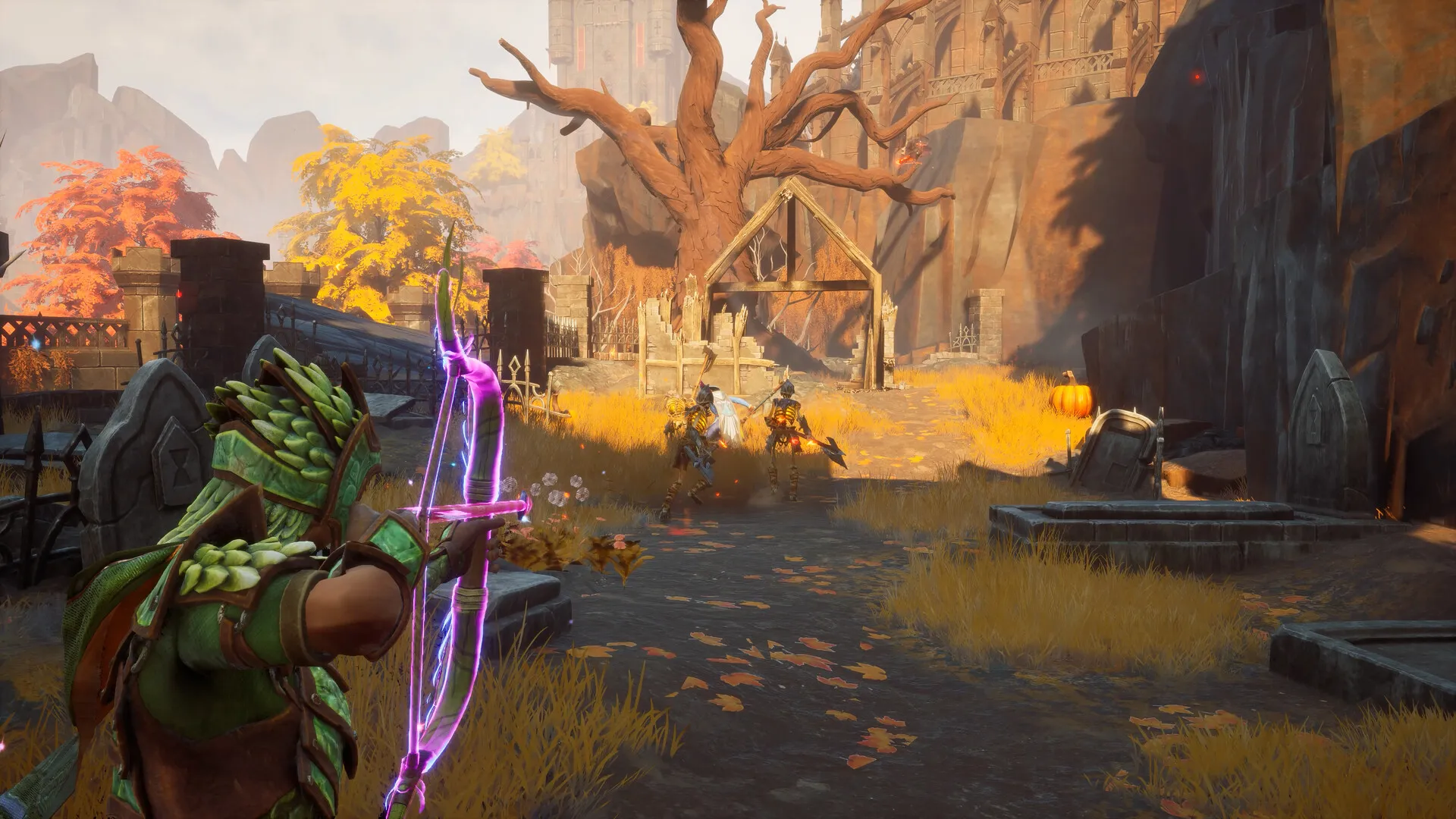
A build here is a stack of choices, not a class
Three separate systems decide what a character can do, and none of them lives on a build screen.
Nothing in Dragonwilds asks you to commit to a role at character creation. The decisions that shape a character sit in three different places — the weapon in your hands, the class of armour in your slots, and the skill levels you have earned — which means two players at the same level can fight in completely different ways, and changing any one of the three changes the setup more than a small stat difference ever would.
The word builds is doing two jobs in this game
Search for Dragonwilds builds and you will find two unrelated subjects. This page covers character builds — weapons, armour classes and skill unlocks. The other kind is base and house building, which is a Construction project with its own piece tiers and building menu. If you came here for the second kind, the base locations guide and the world settings guide are where that work is documented.
| Layer | What it decides | Where it is fixed |
|---|---|---|
| Combat style | Which damage type you deal, and therefore which enemies you are strong against. | The weapon you are holding. The wiki splits melee into one-handed and two-handed, ranged into shortbows, longbows and crossbows, and magic into wands and battlestaves. |
| Armour class | Which set bonus you are working toward and which damage type you soak best. | Head, chest, leg and cape slots. Most pieces carry durability and wear down in combat or from falls and failed vault traps, and they are repaired at the same stations that made them. |
| Skill levels | Which abilities, spells and recipes exist for you at all, on top of the small passive bonus every level grants. | Attack, Ranged and Magic for fighting, with Runecrafting, Cooking and the gathering tracks feeding them from the side. |
The combat triangle decides your weapon, and the world decides your triangle
Three damage types, and a game world that is explicitly built around the mismatch between them.
Weapons are crafted at the crafting table, the blacksmith’s bench, the fletching bench or the mystic forge, and repaired at those same stations when durability drops. Recipes are not all sitting on the menu: monsters and chests drop recipe items that have to be read before the weapon becomes craftable, which is why a weapon tier is normally gated behind exploring rather than behind a level.
For build purposes the important sentence on the wiki is the one about the mismatch: the foes of Ashenfall are weak to and resist certain attack types, so a varied arsenal is paramount for ease of exploration. Carrying one style is not wrong so much as narrow, and the deeper into the map you go the more that narrowness costs.
| Style | Families | How distance changes it | What the wiki adds |
|---|---|---|---|
| Melee | One-handed and two-handed | Close quarters only. | Both melee types can block without a shield, and the wiki prints every combo with the bonus attacks granted by Weapon Expertise, unlocked at 16 Attack. |
| Ranged | Shortbows, longbows, crossbows | Shortbows work close to moderate, longbows want long range, crossbows only work at relatively short range. | Shortbows can be drawn or quick-fired at reduced range and damage. Longbows must be drawn, which gives them the lowest fire rate and the highest per-shot damage of the three. |
| Magic | Wands and battlestaves | Not broken down by range on the weapons page. | Spell casting is priced in runes, so Runecrafting sits underneath any magic setup whether you planned for it or not. |
Weapon families and range behaviour come from the wiki weapons article; the note about how each family is used is quoted from its own description of the type.
Armour set bonuses are the closest thing to a build-defining stat
Each class pays out at one, two and three matching pieces, and the third piece is where a style stops being a damage type and starts being a plan.
Armour is worn in the head, chest, leg and cape slots, and it is classified along the same combat triangle as weapons. Wearing several pieces of the same class switches on a set bonus, so the class you pick is really a choice between three different reward structures rather than three different defence numbers.
| Set | One piece | Two pieces | Three pieces |
|---|---|---|---|
| Melee | -33% block stamina cost | +50% crit chance after blocking | +25% damage to staggered targets |
| Ranged | +40 stealth speed | -33% ranged attack stamina cost | +25% weak point damage |
| Magic | -50% stamina regen delay | +10% magic attack speed | +15% magical crit chance |
Published set bonus values, quoted from the wiki armour article. Capes sit in the back slot and are described there as minor defensive bonuses and otherwise mainly cosmetic.
The melee three-piece is a combo, not a stat
The wiki defines parrying as starting a block on the same beat as an enemy attack: it produces an audible clang and staggers the monster unless the monster is immune, and Velgar is the named exception. Melee armour then adds 25% damage to staggered targets at three pieces and 50% crit chance right after a block at two. The set pays you for blocking on rhythm, which is a different skill from the one a damage stat would reward.
The directions the evidence actually supports
These are the four setups the published material points at. They are descriptions of a play pattern, not a ranking.
| Direction | What it leans on | Why the sources point here |
|---|---|---|
| Block-and-stagger melee | Melee armour at three pieces, Parry at Attack 5, weapon special attacks at Attack 8, Adaptability at Attack 23. | The three melee pieces multiply each other — cheaper blocks, crit chance straight after a block, bonus damage on staggered targets — and parry is the mechanic that creates the stagger in the first place. |
| Ranged repositioning | Ranged armour at three pieces, a bow family matched to the fight length, stealth. | +40 stealth speed and +25% weak point damage reward a fight you chose the distance for, and shortbows are the only family that quick-fires when something closes the gap. |
| Elemental caster | Magic armour at three pieces, a rune supply from Runecrafting, the elemental options higher Magic levels open. | +10% magic attack speed and +15% magical crit chance sit on top of the longest spell list in the game, and the spell tables price almost every entry in runes. |
| Weapon-swapping hybrid | Weapon Expertise at 16 Attack, one developed style plus gathering skills, food buffs. | The wiki treats a mixed arsenal as the normal way to explore Ashenfall, and the skills video adds that range and magic become necessary in harder content and boss fights whether or not you like the style. |
The crossovers that decide whether a build feels good
Four systems run underneath all three styles, and they are usually the parts build write-ups skip.
- Attack pays for magic utility. The spell and ability tables put Enchant Weapon: Fire at Attack 20 and Enchant Weapon: Air at Attack 30, and the attack potion recipe at Attack 34 — enchantments a caster builds around come off the melee track, not the Magic one.
- Runes are a running cost, not a one-off. Almost every spell in the IGN tables is priced in runes, so a caster maintains a second economy on top of gear: the rune supply, and the inventory weight it takes to carry.
- Food replaced healing potions. The skills video reports that healing potions were removed from the game and that meals now carry the combat, stamina and gathering buffs, which makes Cooking a combat skill in practice. Our skills and spells guide follows Cooking, Farming and Fishing together for exactly that reason.
- Stamina is the real limiter. Weapons carry stamina costs, melee armour cuts the cost of blocking by a third, ranged armour cuts ranged attack cost by a third, and the Attack and Magic tracks each reduce their own stamina cost by 1% per level.
Which page answers which part of a build
This page is deliberately the map rather than the encyclopedia. The item-level detail lives one page over in each direction.
| Build question | Where it is answered |
|---|---|
| Which level gives me which ability? | The skills and spells guide carries the ability and spell tables with levels, rune costs and cooldowns. |
| Which weapon should I craft next? | The weapons guide covers the families, the tiers and the progression between them. |
| What do I wear with it? | The armour guide covers the classes, dragonhide and capes. |
| Where do the materials come from? | The materials guide and the blast furnace guide for the smelting end of it. |
| How does combat actually feel at 1.0? | Our 1.0 review is about how the game plays rather than what its numbers are. |
| How do I build a house instead of a character? | The base locations guide, the linked chests guide and the world settings guide. |
What this page will not tell you yet
Build advice normally means rankings. Rankings need a damage table or play testing, and neither is in the material behind this page.
That is a real gap rather than caution for its own sake. The wiki armour article publishes the set bonuses quoted above but does not rank the classes, the weapons article points readers to separate stamina and combat articles for damage figures, and the skill tables that would let you compare unlock paths disagree with each other on several levels. Filling that gap by feel would produce a tier list that looks confident and is not.
- No damage-per-second comparison was made for this page, in game or from a table.
- No set bonus was tested. The three-piece values are reported exactly as the wiki publishes them.
- Ranged has no section in the cached IGN skill page, so the ranged direction above is reasoned from armour bonuses and the weapons article rather than from a published ability list. Trick shots and snares are named in the video without levels.
- Whether 1.0 retuned combat pacing and unlock levels is unknown here. The wiki flagged unlock pacing as something to re-check after launch week, and this page was written the day after launch.
No tier list, and that is a decision
The skill tables behind this page disagree with each other on rune and spell levels — the IGN tables put fire, nature and law runes at 13, 18 and 16, while the video puts the same three at 25, 38 and 50. Until those numbers settle in game, any build that plans around a specific level is planning around a number one of its sources disputes.
Sources
What this page was checked against.
- RuneScape: Dragonwilds Wiki — Weapons
- RuneScape: Dragonwilds Wiki — Armour
- RuneScape: Dragonwilds Wiki — Skills
- IGN — RuneScape: Dragonwilds Skills
- Primitive Nomad — RuneScape Dragonwilds: Best Skills to Level First
How this page was verified
Written on 16 September 2026, the day after the 1.0 launch, from the wiki weapons, armour and skills articles, the IGN skill tables and one video guide published on 24 August 2026. No character was levelled, no weapon was crafted and no set bonus was tested for this page. Every value here is quoted from the source that published it, and the places where those sources disagree are listed instead of averaged.
Still open
- Ranged has no section in the cached IGN skill page, so the ranged direction on this page is reasoned from armour set bonuses and the weapons article. The abilities named by the video — trick shots and snares — have no published levels in any source read here.
- The level tables disagree. The IGN tables put fire, nature and law runes at 13, 18 and 16; the video puts the same three at 25, 38 and 50, and groups Windstep under Agility rather than Runecrafting. Any build planned around a specific level should confirm it on the in-game skill screen.
- No damage-per-second figures were verified. The wiki routes readers to its own stamina and combat articles for those tables, and neither was part of the material read for this page, so no style is ranked against another.
- The set bonuses are reported as published and were not tested in game. Whether bonuses from a deliberately mixed set combine in the way the per-class tables imply is not stated in any source read here.
- What 1.0 changed about combat and unlock pacing is unknown to this page. The wiki flagged unlock pacing as a post-launch re-check item, and this page was written the day after launch.